Minor
Aerospace Engineering
Designed for mechanical and civil engineering majors.
Minor
Designed for mechanical and civil engineering majors.
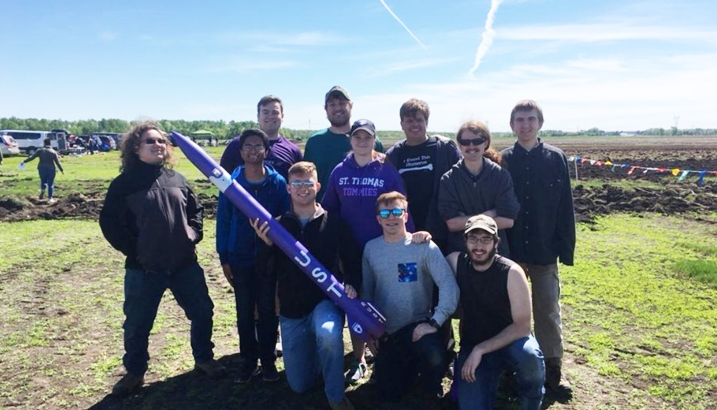
Aerospace engineering is about solving some of the world's toughest engineering challenges—from making air travel safer, cleaner and more sustainable to designing the technologies that explore our atmosphere and beyond. The Aerospace Engineering minor at the University of St. Thomas gives mechanical and civil engineering students the opportunity to apply engineering principles to flight, spacecraft and advanced transportation systems through specialized coursework and hands-on learning. You'll learn topics and develop practical skills in aerodynamics, propulsion, fluid mechanics, composite materials and thermodynamics that prepare you for graduate study or careers in one of engineering's most innovative industries.

You’ll take foundational engineering courses in your declared major (Mechanical or Civil Engineering) plus additional courses specific to the Aerospace Engineering Minor program.
These five courses are required in the Aerospace Engineering minor program:
All students pursuing the aerospace engineering minor also choose elective courses that fit their specific interests and career goals. You'll choose a minimum of six credits from this list of electives:
As an engineering major, you’ll complete the Senior Design Clinic capstone during your senior year. Students completing the Aerospace Engineering minor receive priority when selecting aerospace-related Senior Design Clinic projects, when available.
In addition to the scholarships and financial aid offered through the university, alternative sources, and other federal and state programs, the College of Engineering offers several scholarship opportunities for undergraduate students studying or planning on studying engineering.
A $12,500 Engineering Board of Governors Scholarship is competitively awarded to an entering first-time, first-year student planning to major in engineering. Applicants must complete a special scholarship application and an application for admission by the deadline. This award is renewable for three more years for a total of $50,000.
Admitted engineering transfer students are automatically considered for privately funded Summit Engineering Scholarships with annual awards up to $10,000.
Over 50 scholarships valued between $250 and $4,000 are made available for outstanding returning engineering students each academic year.
Meet two of our faculty who have expertise and hands-on experience in the field of aerospace engineering.
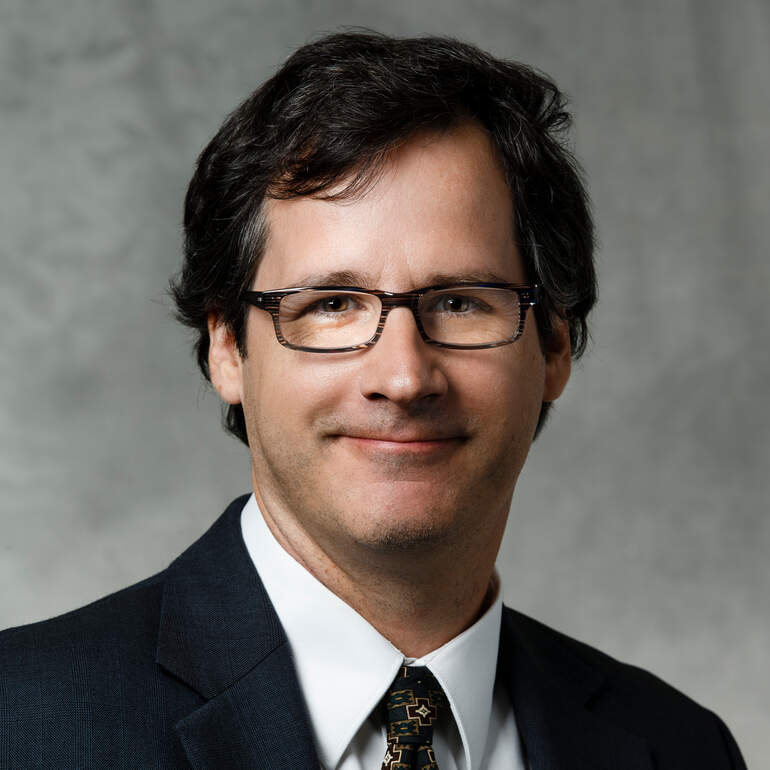
Dr. Forliti brings more than 20 years of experience solving real-world aerospace and propulsion challenges in both industry and academia. His work has supported cutting-edge research in jet engines, rocket propulsion, and advanced defense systems at organizations including the Air Force Research Laboratory and BAE Systems.
At the University of St. Thomas, Dr. Forliti leads research in aerospace propulsion and combustion instability while mentoring students through hands-on projects that prepare them for careers in the fast-moving aerospace industry. He is passionate about helping students build their skills and confidence to launch successful engineering careers.

Dr. Shepard specializes in aerodynamics, fluid mechanics, and wind tunnel testing. His research combines hands-on experiments and computer simulations to investigate airfoil performance, drag reduction, and bio-inspired engineering designs. Students have exciting opportunities to work with him in the University's wind tunnel and research labs.
Dr. Shepard enjoys working on research with undergraduate students. Currently his student researchers are studying the impact of bio-inspired surface features on drag and the role of hydrofoil trailing edge sharpness on performance. Since joining St. Thomas, Dr. Shepard has mentored more than 70 undergraduate researchers, preparing them with the technical skills and experience needed for careers in industry or graduate school.
You’ll take foundational engineering courses in your declared major (Mechanical or Civil Engineering) plus additional courses specific to the Aerospace Engineering Minor program.
Required Courses for the Minor in Aerospace Engineering (12 credits):
And Elective Courses (choose a minimum of 6 elective credits from the following list):
Your faculty advisor will personalize a Plan of Study with you based on your goals. View the Undergraduate Catalog to learn more about the Minor in Aerospace Engineering.
Sample Plans of Study include:
Minor in Aerospace Engineering
There is more to learn about St. Thomas, including our ranking as a Best Value School by U.S. News & World Report, the many classroom and extracurricular activities that will be part of your student experience and so much more.