Peace Engineering
Minor
Minor
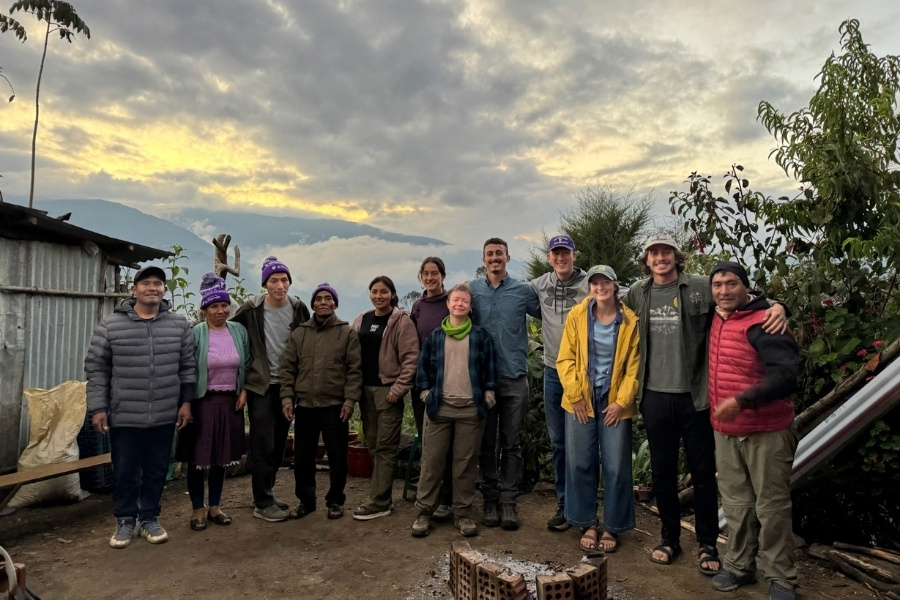
The Peace Engineering minor at the University of St. Thomas combines engineering with justice and peace studies to help students design solutions that improve people's lives. You'll explore how engineering can address challenges involving clean water, energy, infrastructure and technology while learning to understand the needs and perspectives of the communities affected by those challenges.
At St. Thomas, peace engineering is grounded in the idea that peace is more than the absence of war. It's about creating just and equitable conditions that allow people and communities to thrive.
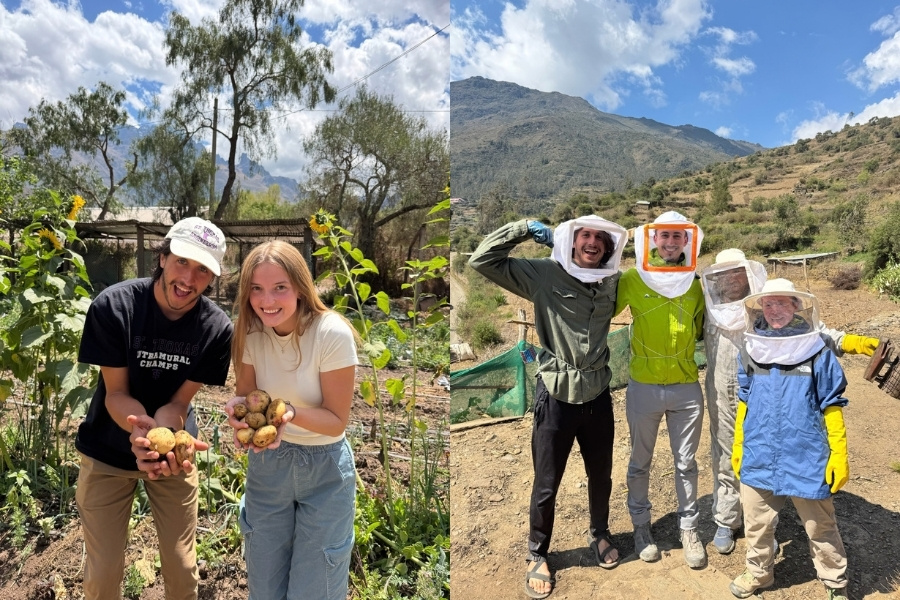
You'll explore justice, peace and social conflict through interdisciplinary coursework, gain firsthand experience with community challenges, and apply what you've learned to engineering design.
All students pursuing the Peace Engineering minor complete coursework in:
You'll also complete a peace engineering-designated Senior Design Clinic project and a vocational seminar connecting your engineering education with service and the common good.
You'll choose one additional course that explores approaches to addressing injustice, resolving conflict or creating positive social change:
Put your learning into practice through a significant experience that exposes you to poverty, injustice, social conflict or marginalization. You may fulfill this requirement through opportunities such as:
This experience may be completed for academic credit or through an approved non-credit opportunity.
The College of Engineering offers scholarships for incoming first-year students, transfer students and returning engineering students, in addition to scholarships and financial aid offered by the University.
A $12,500 Engineering Board of Governors Scholarship is competitively awarded to an entering first-time, first-year student planning to major in engineering. Applicants must complete a special scholarship application and an application for admission by the deadline. This award is renewable for three more years for a total of $50,000.
Admitted engineering transfer students are automatically considered for privately funded Summit Engineering Scholarships with annual awards up to $10,000.
Over 50 scholarships valued between $250 and $4,000 are made available for outstanding returning engineering students each academic year.

Peace Engineering brings together faculty from engineering and justice and peace studies. Their expertise helps students understand complex challenges, work with communities and apply engineering skills to develop solutions that serve the common good.
Associate Professor of Justice and Peace Studies
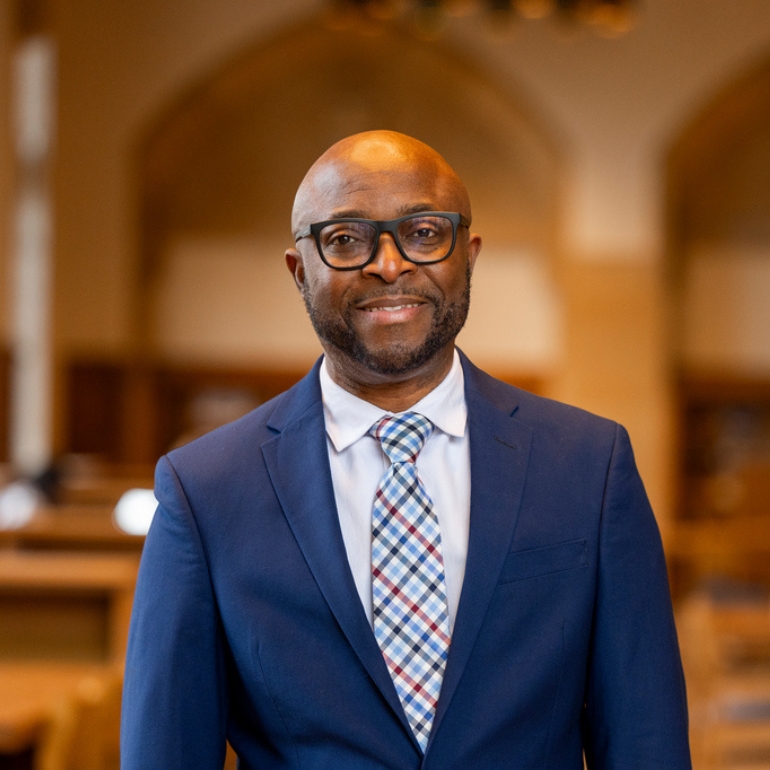
Dr. Obasesam Okoi is Associate Professor in the Department of Justice and Society Studies and Founding Director of the Artificial Intelligence and Society Innovation Lab (ASIL). His scholarship examines how social, environmental, and technological systems interact to create conditions for conflict and insecurity, how state and non-state actors respond to these complex and interconnected challenges, and how such responses can advance peace and justice.
He is particularly interested in how natural resource extraction, climate change, artificial intelligence, and governance challenges reshape patterns of conflict and insecurity and the conditions of societal well-being.

Professor and Director, Materials Science and Engineering
Brittany's research group focuses on novel composite materials for additive manufacturing to order to achieve new advances in magnetic elastomer smart materials. These materials achieve remote contactless motion for soft robotic applications inside the human body or inside/outside a vessel. Earlier in her career, Brittany focused on creating and investigating novel nanoscale materials for energy efficient electronics that last longer on a single battery charge.
In addition to extensive national and international collaborations, she utilized a number of national laboratory facilities across the US to complete this research, with a particular focus on characterizing materials by powerful synchrotron (high energy x-ray) radiation techniques.
Capstone Director for the College of Engineering
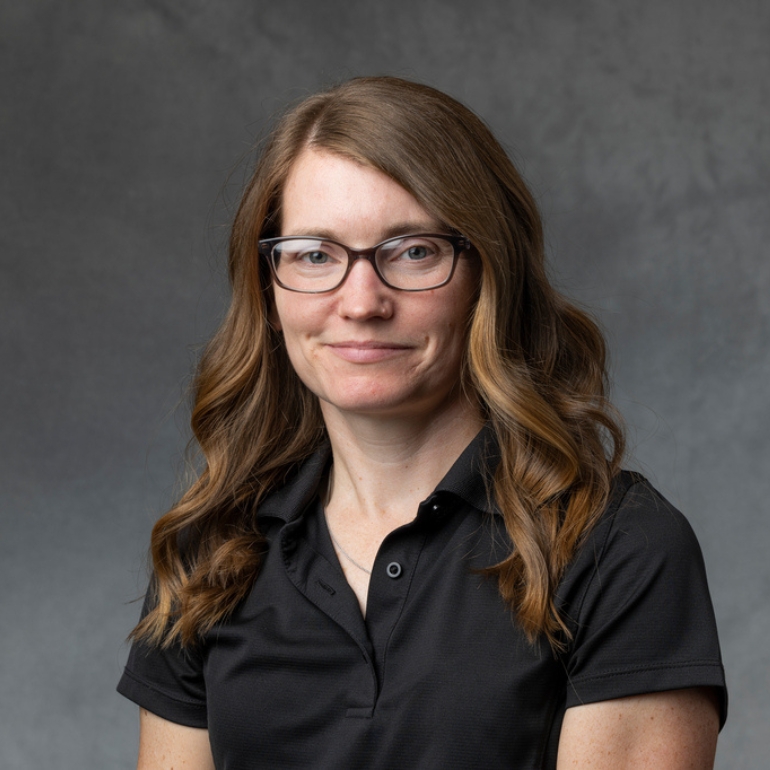
Prior to joining the University of St. Thomas in 2015, Tiffany worked for Honeywell Aerospace. She managed numerous projects from small scale product design through manufacturing line conversions and large corporate initiatives. As a Lead Senior Process Engineer at Honeywell, Tiffany led a team of engineers in continuously improving and supporting the supply chain and process flow of pressure sensor manufacturing lines.
Peace Engineering Minor Requirements:
*credits will count towards Integration in the Humanities (submitted for approval)
**This course can count as engineering elective credit, as well as IH+GP for core curriculum requirements. It is currently offered once every two years. This course is an introduction for students, to understand Peace Engineering and to learn about the underlying concepts of what it means to be a Peace Engineer. It is open to both engineering and non-engineering majors. It tackles engineering design and the Circle of Praxis in the context of complicated problems involving critical social/economic/cultural/environmental/etc. dimensions, including topics such as systems thinking, human-centered design, intercultural learning and competence building, stakeholder & scenario analysis, and more.
Appropriate experience of poverty, injustice, social conflict, or marginalization. May be done for credit through JPST 475-478 Experiential Learning.
It may also be done on a non-credit basis (e.g., in the context of another course or through volunteer activities). Possibilities include VISION Trips and off-campus study through programs that expose students to poverty and oppression.
Examples of appropriate off-campus study programs include those run by: Augsburg’s Center for Global Education (in Cuernevaca Mexico, conflict resolution in Northern Ireland); American University’s Washington Semester (e.g., on homelessness); and UMAIE. VISION Trips during January term, spring break or summer sessions (to Guatemala, Appalachia, the border of Mexico, a Native American reservation, etc.), and VIA programs located in the Twin Cities (e.g., working at a shelter, tutoring immigrant students, etc.).
For official course and degree requirements, see the Peace Engineering Minor in the University Catalog.
Your faculty adviser will help you plan how the Peace Engineering minor fits with your engineering major.
Explore sample four-year plans for students majoring in civil, computer, electrical or mechanical engineering:
Minor in Peace Engineering
There is more to learn about St. Thomas, including our ranking as a Best Value School by U.S. News & World Report, the many classroom and extracurricular activities that will be part of your student experience and so much more.