Co-create with other people and with AI
Collaborative Intelligence Master's Degree
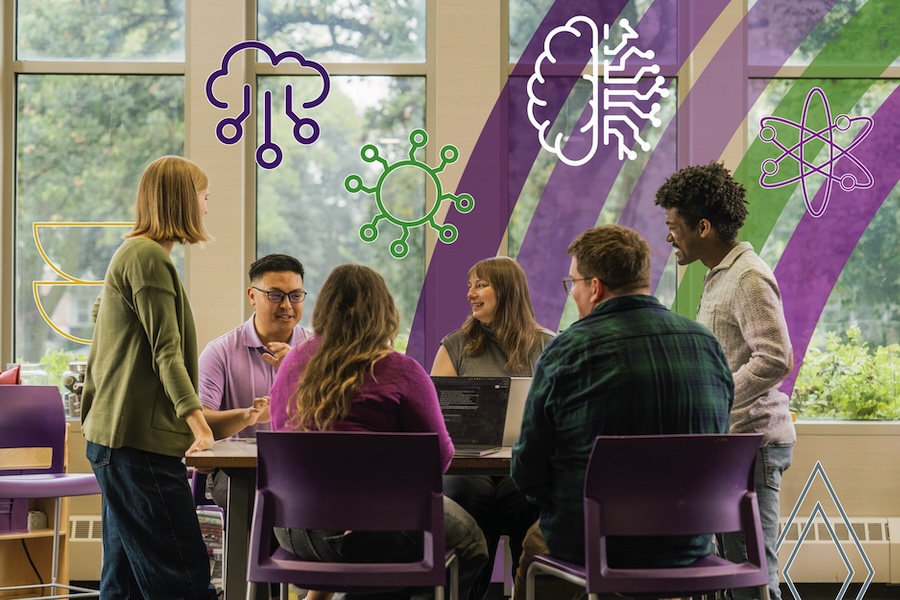
Co-create with other people and with AI
The Master of Arts in Collaborative Intelligence (MACI) is a program for recent graduates and others who want to gain a competitive edge in the job market by developing practical AI fluency and pairing it with high-demand skills in critical thinking, communication, and teamwork.
The M.A. in Collaborative Intelligence builds on the strengths of your bachelor's degree, allowing you to apply previously completed coursework toward a master’s degree that can be finished in as little as seven months.
The result is a fast, affordable bridge from college to career or from current role to what comes next. You'll leave with both an advanced credential and a professional portfolio that shows how you can contribute in AI-transformed workspaces.
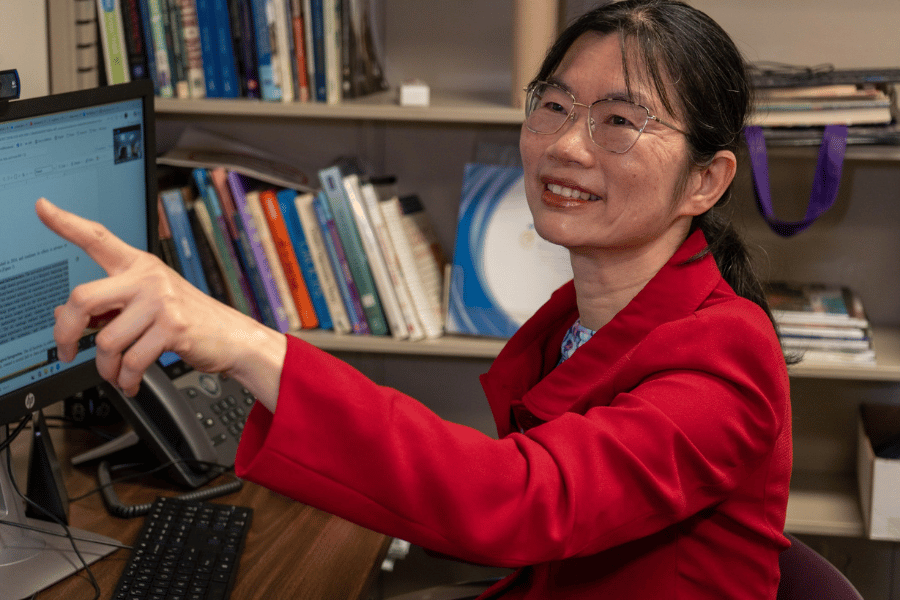
Dr. Candace Chou, MACI Program Co-Director
Each course is offered multiple times throughout the year (fall, spring, and summer semesters). You will work with your advisor to choose a course sequence that fits your schedule. Each course lasts about seven weeks. If you need to pause for a semester or half-semester, any course(s) you missed will be available again soon.
Complete in seven months (accelerated)
Take two courses at a time (four seven-week courses per semester, for two semesters) and finish in as little as seven months.
At your own pace
A slower-paced schedule works, too, for those balancing full-time employment or other commitments. Work with your academic advisor to create a schedule that works for you and still earn your degree in less time than a master's usually takes, thanks to the six credits you can transfer in from undergraduate work.
Eight courses. Two categories. One degree.
MACI courses weave practical AI fluency into the study of human collaborative skills. Some focus on AI tools, others concentrate on human interaction and people skills, but AI shows up in the content of every course.
The eight courses divide into two categories (full course descriptions):
AI Tools & Systems (three 3-credit courses):
The Human Edge (five 3-credit courses):
Additionally, students typically transfer in six undergraduate credits from courses that include substantial writing, capstone, or portfolio-based work. See the full course descriptions for details.
Throughout the program, you will develop a professional portfolio featuring an artifact from each course. The portfolio provides tangible evidence of skills that can be shared with employers.
Fully online and asynchronous:
Online — but not on your own:
Students with varying levels of AI familiarity are welcome.
If you have no AI experience:
If you have modest AI experience:
If you have a strong AI background:
Recent graduate entering the workforce
You have a bachelor’s degree and strong foundational skills. The question is how to differentiate yourself in a job market where AI is raising the baseline on technical tasks and placing more value on communication, sound judgment, and collaboration.
Working professional, building new skills in AI
You’re already working in communications, healthcare, nonprofit work, education, business, or any field where AI is changing the landscape. You want to understand and work with AI more confidently, without leaving your job to do it.
Career-changer moving toward AI-adjacent work
You’re not looking to become a machine-learning engineer or to lead AI teams, but you are interested in moving into roles where AI fluency is especially important: instructional design, content strategy, project coordination, specialized consulting, etc.
As AI takes on more routine technical and analytical work, job candidates need to show they have skills beyond use of AI.
As technical and analytical work increasingly shifts to AI, the competitive edge moves to graduates who can do what AI still can’t: build trust, read a room, inspire a team, and navigate the interface between people and AI tools.
How do people learn, adapt, exercise sound judgment, interact with others, and frame narratives supporting resilience? These questions are at MACI’s core.
Every course pairs human-centered skills and understanding with hands-on AI work. Graduates leave with the confidence to use, evaluate, and shape AI tools, and the ability to apply human collaborative capacities in AI-enabled settings.
MACI's interdisciplinary faculty come from fields across the university, including education, philosophy, communication, sociology, and academic technology.

Associate Vice President of Academic Technology, AI Enablement, and Innovation
Dr. Keiser oversees university-wide AI literacy initiatives. He supervises the Strategic Transformation for Education, Learning, and Research (STELAR) unit along with the instructional technology and media production teams that support STELAR. He holds degrees in biology and science education.

Associate Professor of Sociology
Dr. Liu is the founding faculty lead of St. Thomas' AI-Skills Course Designation System, which identifies classes where students direct AI effectively, evaluate AI outputs, and use AI responsibly. She has research interests in AI, workplace transformation, and globalization, with a focus on how culture, incentives, and trust shape whether AI succeeds in practice.
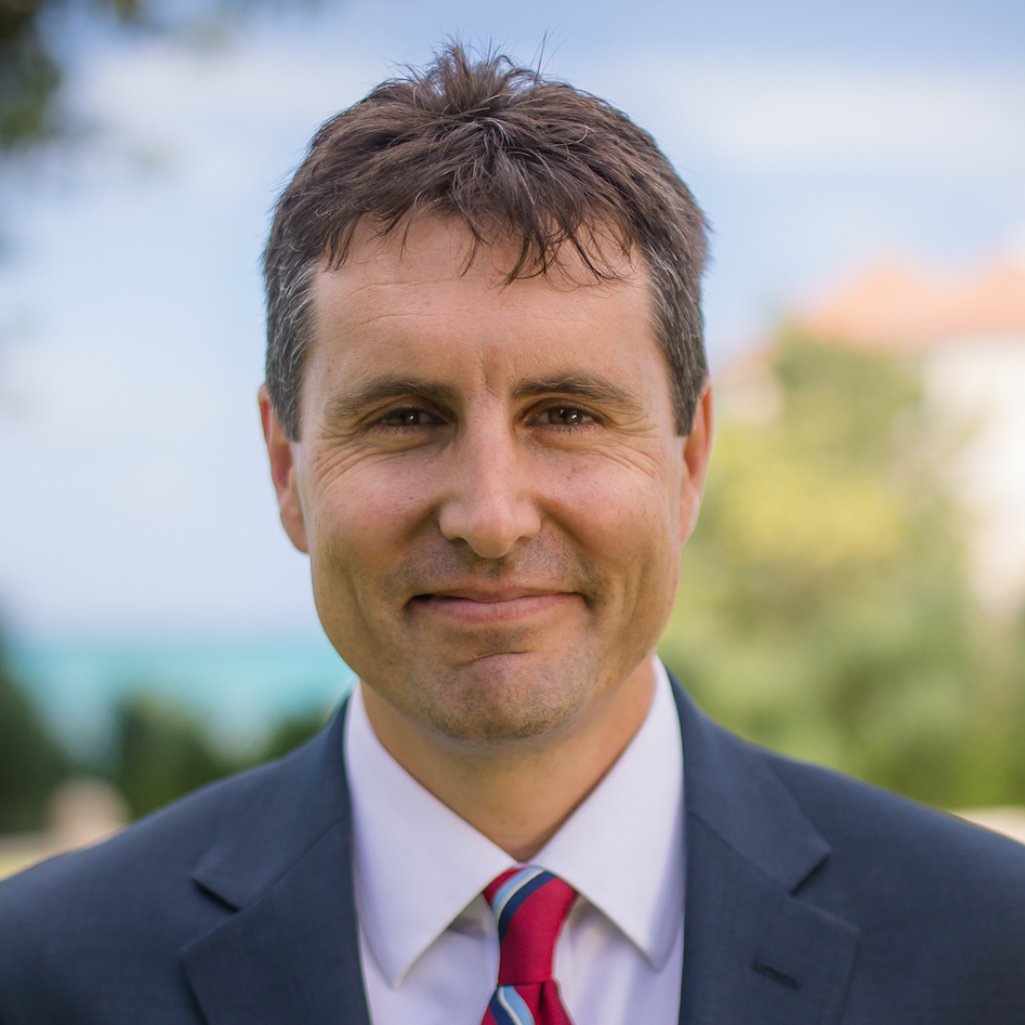
Professor of Philosophy
Dr. Rota, who co-founded an edtech company (personifyai.app), developed his department's course on Critical Thinking and Inductive Reasoning. He has published widely on Aquinas and the philosophy of religion and is receiving his M.A. in data science in 2026. His most recent book is on religion and slavery, past and present.
Innovation with Integrity
At St. Thomas, we recognize both the opportunities and challenges AI brings – ranging from innovation and progress to ethical concerns, job disruptions, and cybersecurity risks.
Our goal is to navigate this new era responsibly, guided by our Catholic intellectual tradition and social teachings. We aim to foster AI literacy across campus, integrate thoughtful AI applications, and uphold our commitment to academic excellence and ethical principles.
To achieve this vision, St. Thomas established the Institute for AI for the Common Good - a multidisciplinary center focused on how AI impacts human life, ethical values, and social norms. The MACI degree is one example of the efforts supported by the Institute.

The MACI degree is an interdisciplinary program housed in the School of Education at St. Thomas. Meet the program co-directors:
Dr. Candace Chou
Professor of Educational Leadership; Director, Doctoral Program in Educational Leadership and Learning
Dr. Chou's scholarship explores the intersection of technology and education. A Fulbright Senior Scholar and long-time researcher, she has published on AI adoption in higher education, immersive learning, and digital equity. She consults with educational organizations on AI strategies, program design, and faculty development.
Dr. Sandra Menssen
Professor of Philosophy; Associate Dean of the School of Education
Dr. Menssen's scholarship focuses on the philosophy of religion and on natural theology. Her teaching interests at present center on logic and critical thinking. As founding co-director of the MACI program, she brings broad expertise in the humanities into exploration of, and support for, human-centered aspects of co-creation with artificial intelligence.
Whether you're pursuing technical roles in machine learning, data science, or AI engineering, or leading teams through digital transformation, our curriculum balances cutting-edge training with ethical leadership development. Our programs equip professionals from all backgrounds to harness AI's potential in an era where technological advancements are accelerating at unprecedented rates. Find your pathway!
Learn more about earning your M.A. in Collaborative Intelligence by requesting information or attending a virtual info session.